USB Power Delivery (USB PD)
also: USB-PD · USB-C PD · PPS · EPR
A USB-C protocol that lets a charger and device negotiate voltage and current, up to 100 W at standard power and up to 240 W with Extended Power Range.
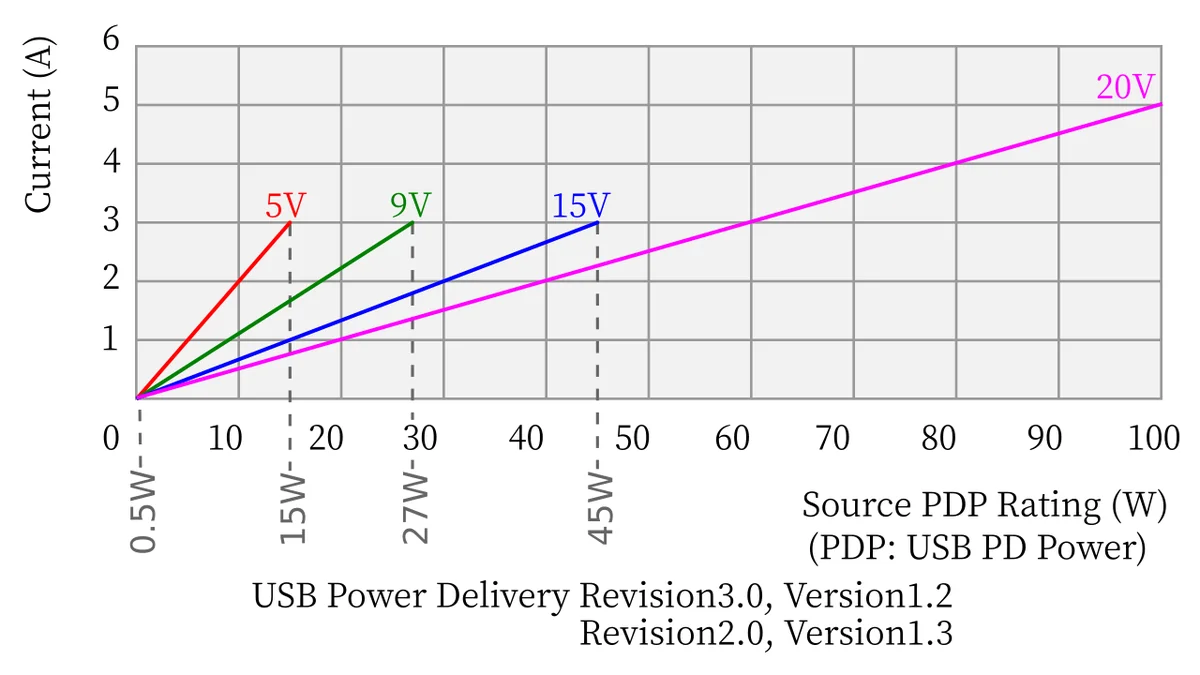
Without negotiation, USB-C supplies 5 V at limited current. With USB PD, the device and charger communicate over the cable's configuration channel and agree on a higher voltage: standard fixed levels include 9, 15, and 20 V, and the Extended Power Range (USB PD 3.1) adds 28, 36, and 48 V for up to 240 W with suitably rated cables. The Programmable Power Supply (PPS) mode allows fine voltage steps, useful for direct battery charging.
For a product, USB PD can replace a custom power adapter with whatever USB-C charger the user owns, but it requires a PD controller chip, sensible behavior when the charger offers less power than wanted, and testing against many real chargers and cables.
Where it bites: users will plug in 5 V-only chargers and low-quality cables, so the product must cope; USB-IF certification and logo use have their own requirements.
Founder takeaway
If you adopt USB PD, decide the minimum power the product can work with, and test with a wide range of real chargers and cables.