Boost converter
also: step-up converter · buck-boost converter
A switching power supply that raises a DC voltage, for example from one battery cell to 5 V, for circuits that need more than the source provides.
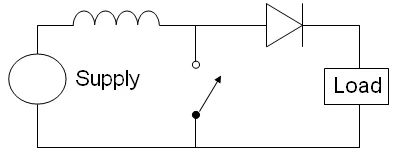
Like a buck, a boost converter uses an inductor and fast switching, but arranged so the output voltage is higher than the input. It lets a product run from one or two cells, hold a constant output as the battery discharges, or drive LEDs, displays, and small motors.
Input current is higher than output current, because power in roughly equals power out plus losses, so the battery, connectors, and traces must handle that higher current. A basic boost circuit cannot fully disconnect the load when switched off, since current can flow straight through from input to output, unless the chip has a true-shutdown feature.
Buck-boost converters handle cases where the input can be above or below the output, such as a lithium-ion cell powering a 3.3 V rail across its whole discharge range.
Founder takeaway
When boosting from a battery, size for the higher input current and confirm the converter truly disconnects the load in shutdown.