IP rating (ingress protection)
also: IP code · IEC 60529 · IP67 · IP54
A two-digit code defined in IEC 60529 that rates an enclosure's protection against solid objects and dust (first digit) and water (second digit).
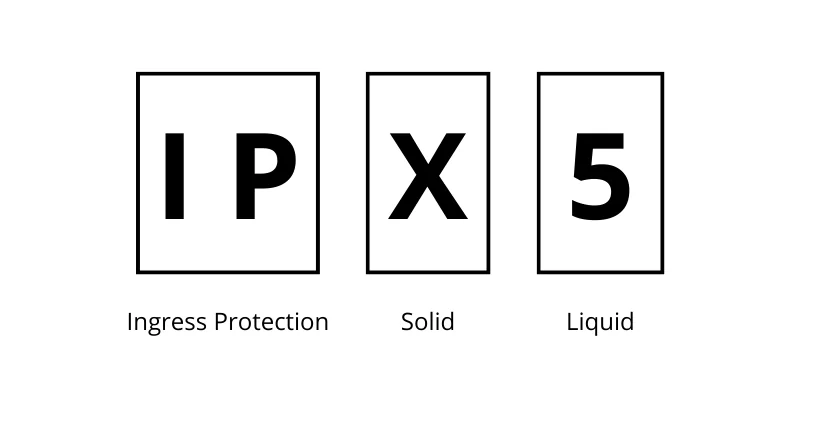
The first digit (0–6) covers solids, from no protection up to dust-tight (6). The second digit covers water, from none through dripping, spraying, and jets, to temporary immersion (7) and continuous immersion under conditions agreed by the manufacturer that are more severe than 7 (8). Higher-pressure, hot-water washdown ratings (IPX9 and related variants) also exist. IP67, for example, means dust-tight and protected against temporary immersion; an "X" means that property wasn't rated (IPX4).
IP ratings are earned by test, not declared from design intent. Seals, gaskets, cable glands, vents, buttons, and connector interfaces all have to perform, often after temperature cycling and aging.
Where it bites: the scale isn't strictly cumulative; passing immersion (IPX7) does not imply resistance to water jets (IPX5/IPX6). Sealing also traps heat and moisture, so vents or desiccants may be needed, and every step up in rating adds cost and assembly sensitivity.
Founder takeaway
Pick the IP rating from the real use environment, design the seals with tolerance stack-ups, and test production-intent units.