Injection molding
also: plastic injection molding · molded parts
Forcing molten plastic into a metal mold to make identical parts in seconds: very low cost per part, but significant upfront tooling cost and lead time.
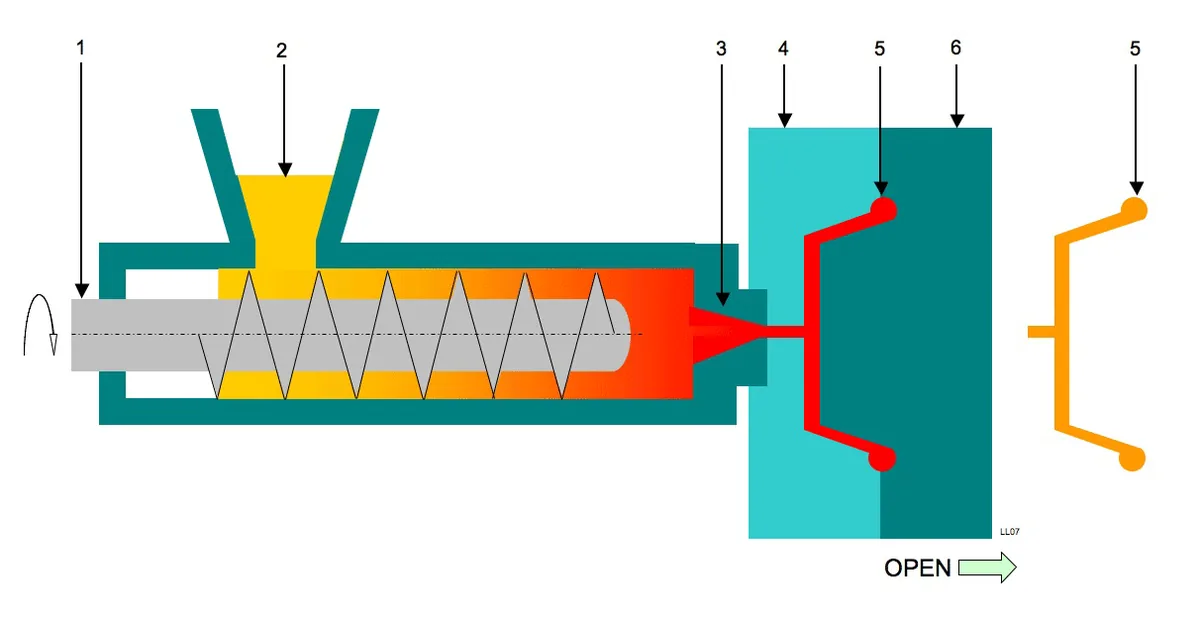
Plastic pellets are melted, injected under high pressure into a precision-machined mold cavity, cooled, and ejected. Cycle times are typically measured in seconds, so per-part cost is low at volume, and most consumer and many industrial enclosures are made this way.
The trade-off is tooling. Designing and cutting a production mold takes weeks to months and is a major upfront cost. Changes after the tool is cut range from cheap (removing steel to enlarge a feature) to impractical without a new tool (adding steel back, moving a parting line).
The design rules that matter most: uniform wall thickness, draft, avoiding undercuts or accepting the cost of side actions, generous radii, and gate and ejector positions agreed with the toolmaker. Material choice (ABS, polycarbonate, PC/ABS, nylon, polypropylene, and others) sets strength, appearance, flammability rating, and chemical resistance.
Founder takeaway
Freeze the design and complete DFM and mold-flow review with the toolmaker before cutting steel; design so likely changes remove steel rather than add it.