Computational fluid dynamics (CFD)
also: CFD · airflow simulation
Simulation of air and liquid flow and heat transfer, used to design cooling, fans, ducts, and HVAC airflow and to predict pressure drop before building.
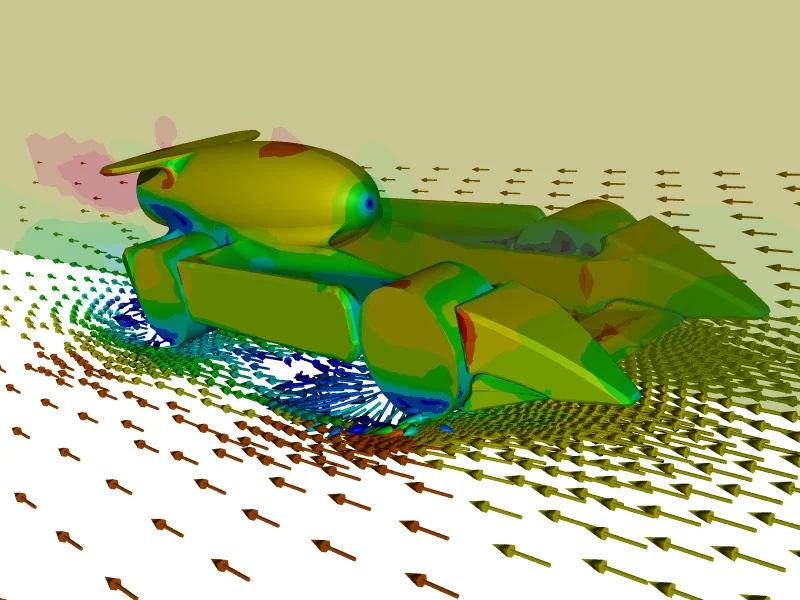
CFD models how fluids move and carry heat: airflow through an electronics enclosure, a heat sink's performance, flow through a duct or manifold, pressure drop across a filter, or air distribution in a room. Teams use it to compare vent placements, fan choices, and duct shapes on screen instead of in a series of prototypes.
Like FEA, it is only as good as its setup: geometry simplification, boundary conditions, the turbulence model, and the heat loads fed into it. Small details such as cable bundles or a missing gasket can change real airflow substantially.
Founder takeaway
Use CFD to narrow the design options, then confirm with temperature and airflow measurements on real prototypes.