Brushless DC motor (BLDC)
also: BLDC · PMSM · EC motor
An electric motor with permanent magnets and electronic commutation instead of brushes: long life, high efficiency, and compact power, but it needs a driver.
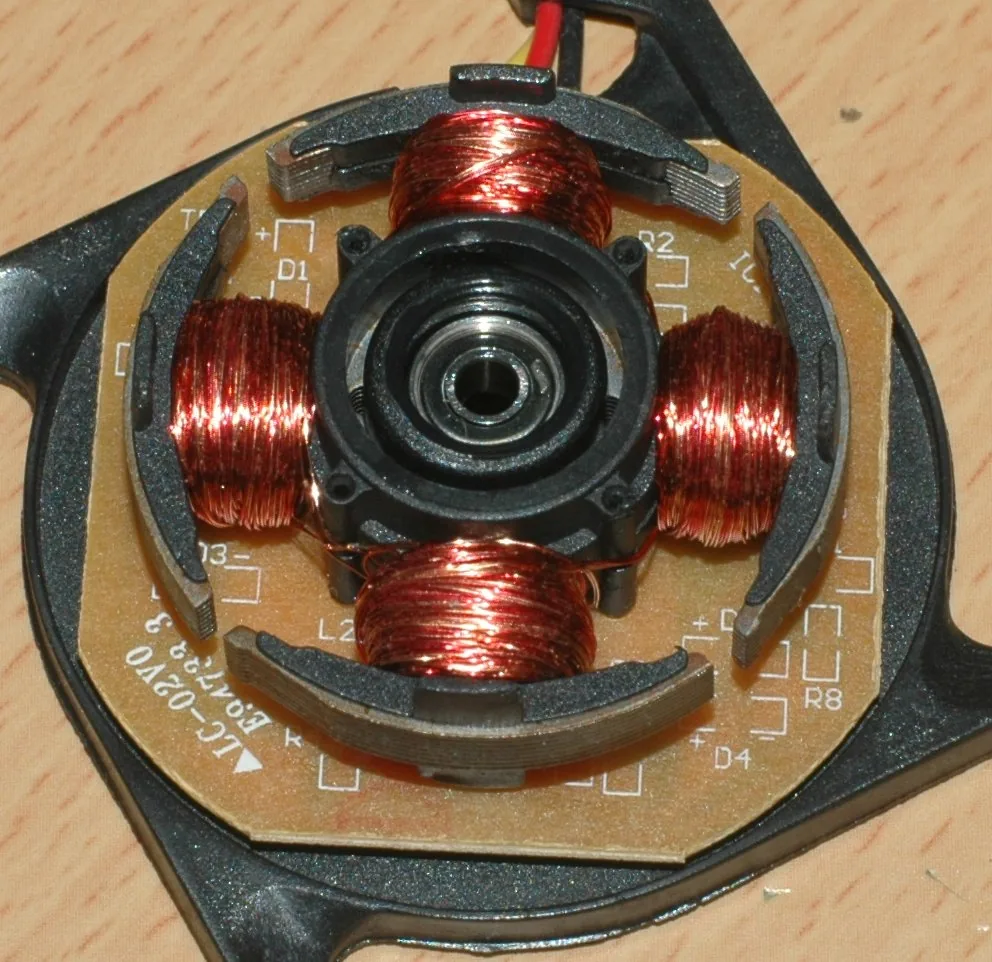
In a brushed DC motor, carbon brushes mechanically switch current as the shaft turns. A brushless motor moves that job into electronics: a driver switches current between the windings based on rotor position, sensed with Hall-effect sensors or an encoder, or estimated from the motor's back-EMF. With no brushes to wear, brushless motors last longer, run cooler, create less electrical noise, and deliver more torque for their size.
They now dominate fans, pumps, drones, power tools, e-bikes, appliances, and HVAC blowers (where they are often called EC motors). The trade-off is more complex and more expensive drive electronics and firmware; the commutation method, six-step or field-oriented control, shapes noise, smoothness, and efficiency.
Founder takeaway
Budget for the motor and its driver as one subsystem; most of the cost and risk sits in the drive electronics and firmware, not in the motor itself.